



The Pattern Has Been Here Before
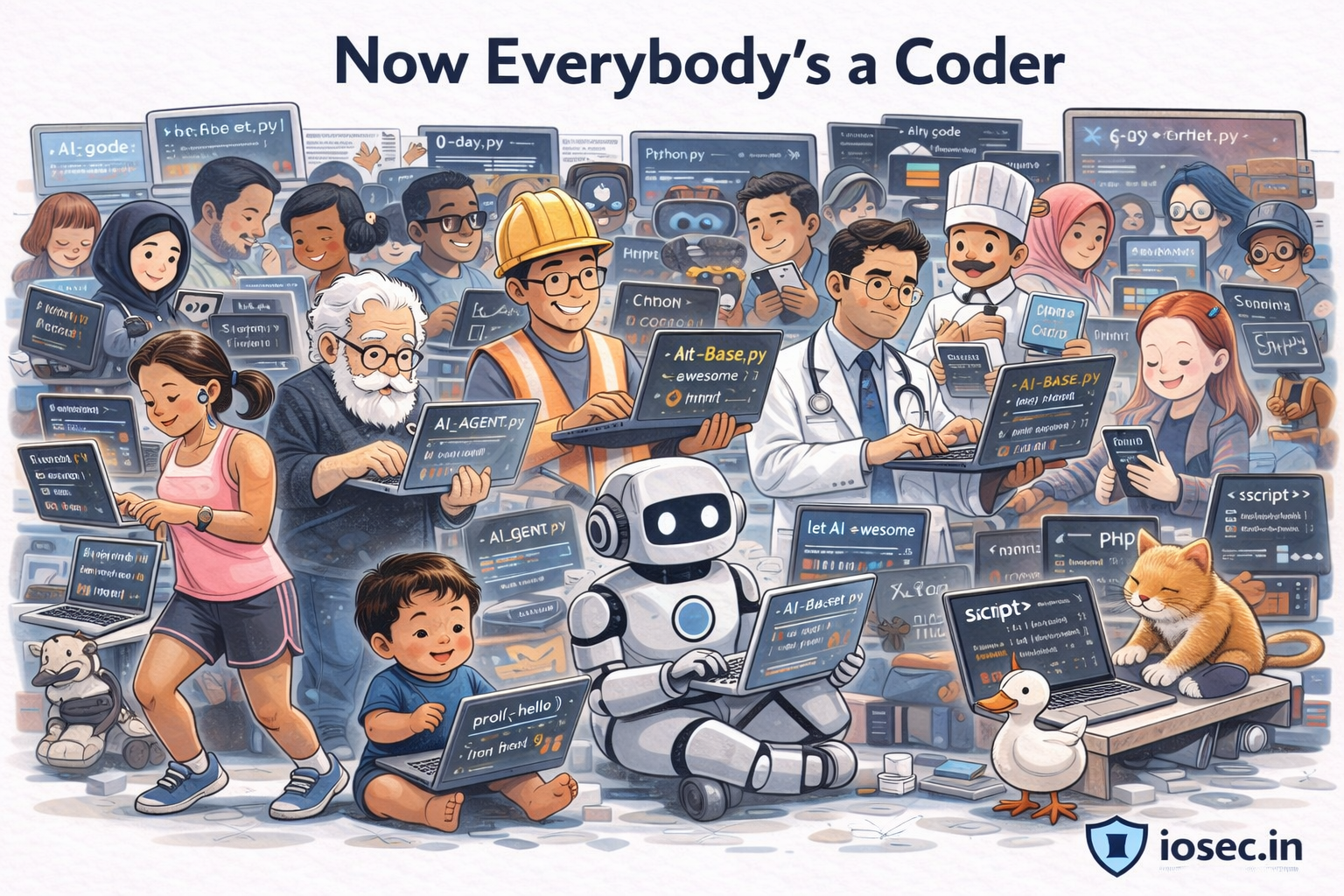
When AWS made servers cheap, everyone became a cloud startup. When no-code tools made apps cheap, everyone became a founder. Now AI has made writing software cheap — and everyone has become an open source maintainer.
The result is the fastest expansion of GitHub repositories in its history. Most of them are AI coding agents, AI wrappers, and AI-powered clones of other AI tools.
The barrier to shipping code has collapsed. The barrier to shipping good code has not.
What Actually Changed
Claude Code, Cursor, Devin — these are not autocomplete. They are autonomous agents that plan, write, test, and iterate on code with minimal human involvement.
A solo developer who needed weeks to ship a working prototype can now do it in hours.
That is genuinely exciting. What followed was predictable: developers who discovered they could ship anything fast started shipping everything fast.
Repositories named AutoDev-OSS, claude-code-free, opendevin-lite appear by the dozen every week. Some are serious. Most are two-day experiments that will never see a second commit.
The Uncomfortable Lifecycle
Here is how it plays out, repeatedly:
A developer builds something useful in a weekend using an AI coding agent. Pushes it to GitHub. Writes an AI-generated README that reads as polished and credible. Posts it to Hacker News.
2,000 stars in 48 hours.
Three weeks later, an issue is filed. No response. A PR sits unreviewed. Six months later — no commits, but the stars remain. New developers keep finding it, integrating it, and hitting walls.
Stars measure discovery velocity. Not project health.
The legitimate tools are getting buried in noise. When everything looks credible at first glance, nothing is.
How to Actually Evaluate a Tool
The old heuristics are broken. A polished README and 5,000 stars can be manufactured in 48 hours. You need different signals.
Commits in the last 90 days — not total count. Recent activity is the only number that matters.
Issue response time — check existing issues before opening one. How long do they sit? Do maintainers engage or disappear?
Breaking change behaviour — does the project have a CHANGELOG? Does it communicate breaking changes or just push them silently?
Model-agnosticism — tools hardcoded to a single provider are liabilities. The model landscape changed significantly in 12 months. It will change again. Prefer tools built on LiteLLM or clean abstraction layers.
What happens to your data — “self-hosted” in a README is not a data privacy guarantee. Read the network calls. Specifically, look at what gets sent where.
The question is not “can I get this running?” It is “can I get this running in six months when something breaks?”
The SaaS Question
If AI can build any MVP in a weekend, is building new SaaS still rational?
It depends entirely on what you are building.
Simple project management tools, basic CRMs, to-do lists with AI features — these are not products anymore. They are features any developer can generate in an afternoon.
What AI cannot easily replicate:
Domain depth — a tool for OT security incident response or clinical trial management requires years of judgment that no prompt captures. The code can be generated. The understanding of what the code should do cannot.
Proprietary data moats — if your product compounds in value because it learns from data nobody else has access to, that is structural. AI tooling cannot replicate it.
Compliance-heavy workflows — HIPAA, SOC2, FedRAMP pipelines are not just technical requirements. They are trust relationships built over time with legal accountability attached.
The SaaS opportunity has not shrunk. The floor dropped out on commodity features. The ceiling on defensible, domain-specific products went up.
Where Open Source Goes From Here
The flood will stratify. Projects with real maintainers, real use cases, and community engagement will compound. Projects built for the launch post will quietly disappear.
Maintenance becomes the differentiator. When everyone can build, the scarce resource is not builders — it is maintainers. Reliability and consistency will outrank novelty.
Interfaces outlast implementations. MCP, OpenAI-compatible APIs, LSP-style contracts — standardise on these. The underlying implementations will keep changing. The contracts will not.
Trust becomes the product. In a world where any tool can be cloned overnight, the audit history, security posture, and credibility of the maintainer are the product.
The Take
Most of what is shipping right now will not exist in useful form in two years. That is not cynicism — it is the natural lifecycle of any creative explosion. Most early web apps were also garbage. What survived had a real reason to exist.
The developers who will look back on this moment as a competitive advantage are not the ones running the most tools. They are the ones who picked fewer, went deeper, evaluated trust seriously, and used the time they saved to build something only they could build.
In the last gold rush, the people who got rich were not the ones panning the most rivers. They were the ones who found one vein and stayed.
Speed is a temporary advantage when everyone has it. Craft, trust, and irreplaceability are the durable ones.